 Arizona Photoshoot
The Best Photography Spots in Arizona, Mapped by Region
The best photography spots in Arizona are not one landmark but twenty-two, spread across five regions that share almost nothing except good light: Page's slot canyons and Lake Powell overlooks, the Grand Canyon's South Rim, Sedona's red rock, Phoenix's desert parks, and a handful of far-flung spots that take real planning to reach. Roughly a third of these spots come with a bookable photographer session; the map below marks the split honestly, spot by spot, with the fee or permit each one actually charges and the hour its light works best. Fees and rules are as checked in August 2026.
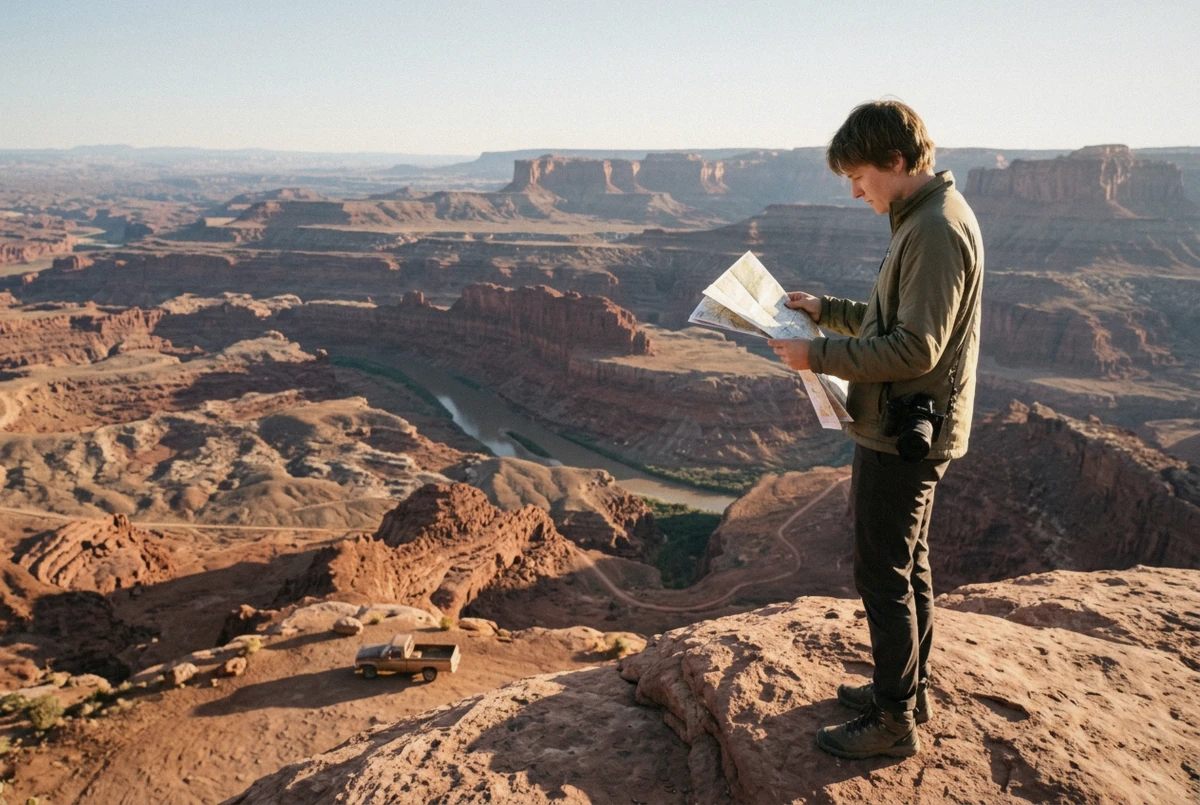
Quick answer
For the classic frame in one day: Upper Antelope Canyon at midday, when the light beam drops through the slot from late March through early October, entered only through a Navajo-guided tour running roughly $85 to $120 depending on the time slot. For the same drama without a lottery or a lava-rock scramble, Cathedral Rock in Sedona loses direct sun on its face about thirty minutes before official sunset, so plan to arrive earlier than the app suggests. Four of these spots charge nothing to shoot, and one, The Wave, lets only 64 photographers a day past the trailhead no matter how badly the rest of us want in.
Key takeaways
- Free, no-permit frames: Gates Pass, the Hole-in-the-Rock window at Papago Park and the Chapel of the Holy Cross, full list on the map below
- Tripods have been banned inside Antelope Canyon since 2019, and the full permit and rule breakdown is worth reading before driving to Page
- Only about a third of these 22 spots have a bookable photographer session attached; the Sedona golden-hour session covers both Cathedral Rock and Bell Rock in one booking
- The Wave's lottery odds, 64 permits a day against more than 200,000 applications a year, make it the one spot on this map that no amount of planning can guarantee
- Havasu Falls dropped its lottery in 2026 but still runs $455 per person for three nights, with no day-trip option at all
All 22 Spots at a Glance
The full inventory, one line each, grouped by region. Fees and permit rules below, last verified: August 2026. "Session" names the package that shoots there; everything else is drive-yourself.
| Spot | Region | Fee or permit | Best light | How you shoot it |
|---|---|---|---|---|
| Upper Antelope Canyon | Page | Navajo tour only, about $85-120 by slot | Midday beams, late March through early October | Antelope Canyon photoshoot session |
| Lower Antelope Canyon | Page | Navajo tour, about $80.50 all-in | Brighter, more ladders, fewer beams | Antelope Canyon photoshoot session |
| Antelope Canyon from the water | Page | $159 per person, boat tour | Any hour, light bounces off the water | Antelope Canyon boat tour |
| Horseshoe Bend | Page | $10 per car, City of Page overlook | Sunrise, or two hours before sunset | Horseshoe Bend photoshoot session |
| Glen Canyon Dam Overlook | Page | Free | Afternoon | Drive yourself |
| Wahweap Overlook | Page | $30 per vehicle inside Glen Canyon NRA, free from the highway pullout | Sunset | Drive yourself |
| Mather Point | Grand Canyon South Rim | $35 per vehicle park gate, plus $100 per person for non-US visitors since January 2026 | Sunrise, the rim's busiest point | Grand Canyon photographer session |
| Hopi Point | Grand Canyon South Rim | Same park gate fee | Classic sunset point | Grand Canyon private photography experience |
| Grandview Point | Grand Canyon South Rim | Same park gate fee | Quieter, morning light | Grand Canyon session, by arrangement |
| Desert View Watchtower | Grand Canyon South Rim | Same park gate fee | Tower silhouette at dusk | Drive yourself, or arrange with a session |
| Cathedral Rock (Red Rock Crossing) | Sedona | Crescent Moon day-use fee, about $12 per vehicle | Golden hour, sun leaves the rock about 30 minutes before sunset | Sedona photoshoot session |
| Bell Rock | Sedona | Red Rock Pass, $5 per day | Morning | Sedona photoshoot session |
| Airport Mesa | Sedona | $3 overlook lot | Sunset panorama | Drive yourself |
| Devil's Bridge | Sedona | Red Rock Pass | Morning, before the queue forms | Drive yourself |
| Chapel of the Holy Cross | Sedona | Free, donation box | Late afternoon | Drive yourself |
| Hole-in-the-Rock, Papago Park | Phoenix | Free | Sunset through the window | Phoenix photoshoot session |
| Desert Botanical Garden | Phoenix | Admission fee, photo policy applies | Morning | Session by arrangement |
| Lost Dutchman State Park | Phoenix | $7 per car | Golden hour, the Superstitions turn pink | Phoenix photoshoot session, extension |
| Dobbins Lookout, South Mountain | Phoenix | Free | Dusk, city lights | Drive yourself |
| Monument Valley | Far-flung | $10 per person plus $15 per vehicle scenic loop, Navajo park, federal passes not accepted | Sunrise, shadow falls between the Mittens | Drive yourself, or Navajo-guided for backcountry |
| Gates Pass, Tucson Mountains | Far-flung | Free | Saguaro silhouettes at sunset | Drive yourself |
| The Wave, Coyote Buttes North | Far-flung | Lottery: $9 to apply, $7 per person if drawn, 64 permits a day | Midday, for the sandstone swirl | Drive and hike yourself |
The Map: Every Spot, Colored by Region
Bubbles are sized by how many bookable sessions reach each spot; grey-ringed markers have none and are drive-yourself. Filter by name, region or fee, or use the buttons to jump straight to a region.
All 22 Spots, Region by Region
Times assume you are chasing the light in the best-light column, not just the closest parking spot.
-
Upper Antelope Canyon
1 of the toursThe slot canyon everyone pictures when they hear Arizona photography: a beam of sunlight dropping through the narrow opening onto sculpted orange sandstone. Entry is only through an authorized Navajo guide, and the beam season runs late March through early October, midday.
Stops here: Antelope shoot, $511/group
-
Lower Antelope Canyon
1 of the toursThe same sandstone, a narrower and brighter canyon reached down a series of metal ladders, with fewer beam moments than Upper but far fewer crowds crossing your frame. Same Navajo-tour access rule applies.
Stops here: Antelope shoot, $511/group
-
Antelope Canyon from the Water
1 of the toursA different canyon experience entirely: a small captained boat runs Wahweap Bay past Glen Canyon Dam into the flooded arm of Antelope Canyon on Lake Powell. No lottery, no ladders, and you bring your own camera.
Stops here: Antelope boat, $159
-
Horseshoe Bend
1 of the toursThe Colorado River looping a thousand feet below a sandstone rim, the single most reproduced Arizona photograph after Antelope Canyon. The overlook is a flat, exposed paved walk; sunrise or the two hours before sunset avoid the midday glare and the crowd at the rail.
Stops here: Horseshoe, $511/group
-
Glen Canyon Dam Overlook
No tourA free roadside overlook above the dam and the narrow Colorado River gorge below it, a quieter contrast to Horseshoe Bend fifteen minutes away. No session works this one; it stays a drive-yourself stop.
No guided tour stops here. Self-drive only.
-
Wahweap Overlook
No tourA high bluff above Lake Powell's main basin with the striped Castle Rock formations across the water. The paid Glen Canyon National Recreation Area entrance covers it, though a free view is available from a highway pullout below.
No guided tour stops here. Self-drive only.
-
Mather Point
4 of the toursThe South Rim's most-visited overlook, five minutes from the visitor center, which is exactly why sunrise here means sharing the rail with a busload of other cameras. The $35 vehicle gate fee (plus $100 per person for non-US visitors since January 2026) covers every South Rim viewpoint for a week.
Stops here: GC private, $413+, GC hire, $176pp, GC proposal, $295pp, GC 2h, $208pp
-
Hopi Point
4 of the toursThe rim's classic sunset viewpoint, a wide promontory with an uninterrupted view down the canyon's main axis. Reached by the free park shuttle in summer or a short drive the rest of the year.
Stops here: GC private, $413+, GC hire, $176pp, GC proposal, $295pp, GC 2h, $208pp
-
Grandview Point
4 of the toursA less-photographed South Rim overlook east of the main village cluster, with the old Grandview Trail switchbacking down toward Horseshoe Mesa. Morning here is quiet compared to Mather Point twelve miles west.
Stops here: GC private, $413+, GC hire, $176pp, GC proposal, $295pp, GC 2h, $208pp
-
Desert View Watchtower
No tourA 1932 stone tower at the canyon's eastern entrance, its silhouette against a dusk sky one of the rim's more distinctive frames. Any of the Grand Canyon sessions can arrange a meeting point here in advance, though most default to the closer western viewpoints.
No guided tour stops here. Self-drive only.
-
Cathedral Rock (Red Rock Crossing)
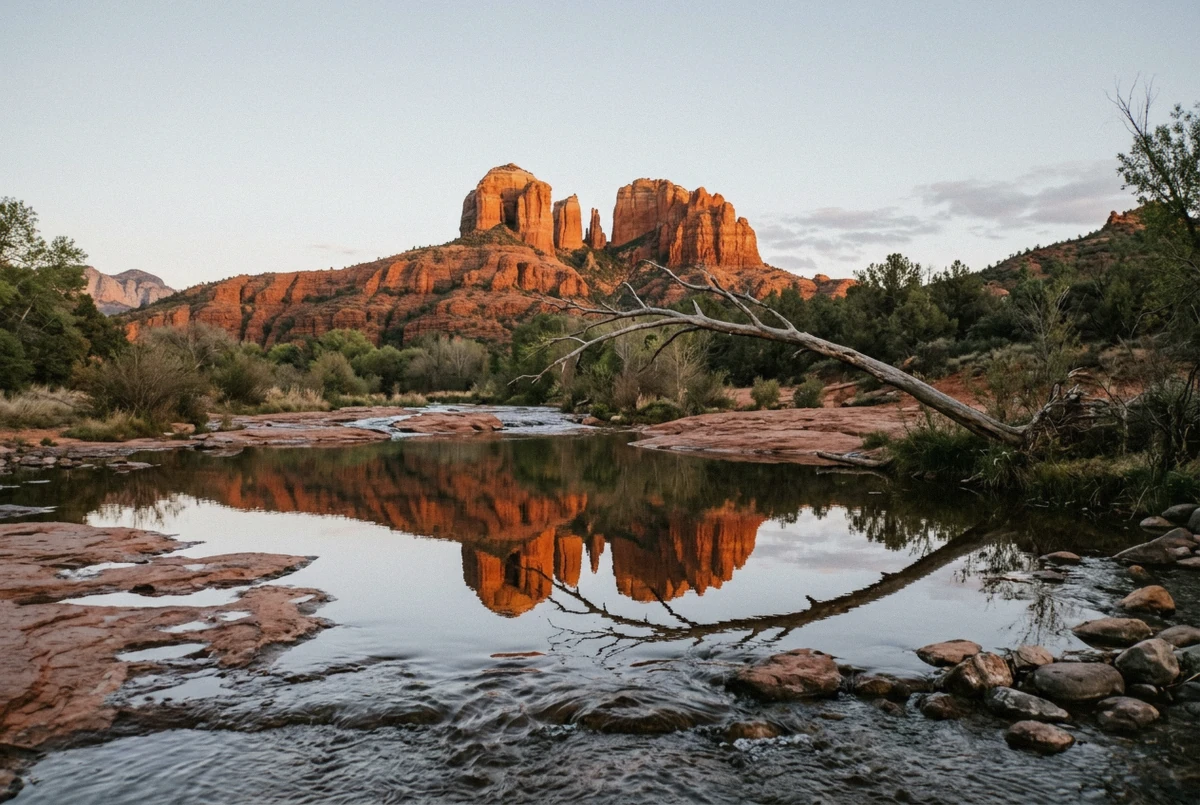
1 of the toursRed spires reflected in the still water of Oak Creek at the Crescent Moon Picnic Site, Sedona's single most photographed formation. The rock's western face loses direct sun about thirty minutes before the official sunset time, so plan around that, not the almanac.
Stops here: Sedona 1h, $197pp
-
Bell Rock
1 of the toursA freestanding red-rock butte beside Highway 179 with an easy pullout trailhead, morning light rounding its curves before the day's heat and haze build.
Stops here: Sedona 1h, $197pp
-
Airport Mesa
No tourA hilltop overlook beside the small municipal airport with a wide sunset panorama over the entire Sedona basin. The small paid lot fills fast in the last hour before sunset; arriving early is the only strategy that works.
No guided tour stops here. Self-drive only.
-
Devil's Bridge
No tourSedona's largest natural sandstone arch, reached by a moderate hike that turns into a queue for the arch itself by mid-morning. Early starts avoid both the crowd and the flat overhead light.
No guided tour stops here. Self-drive only.
-
Chapel of the Holy Cross
No tourA small chapel built directly into a red-rock spur above the highway, free to visit with a donation box at the door. Late afternoon light warms the concrete facade against the rock behind it.
No guided tour stops here. Self-drive only.
-
Hole-in-the-Rock, Papago Park
1 of the toursA red sandstone butte with a natural window that lines up with the sunset for several weeks each spring and fall, saguaro-studded desert around it and the Phoenix skyline small on the horizon. Free entry, easy short climb to the window.
Stops here: Phoenix 1h, $162pp
-
Desert Botanical Garden
No tourA cultivated cactus and wildflower garden inside Papago Park with its own photography policy for paid admission; morning visits beat both the heat and the crowds along the loop trail.
No guided tour stops here. Self-drive only.
-
Lost Dutchman State Park
1 of the toursThe Superstition Mountains turning peach and pink above a saguaro flat, a $7-per-car state park with no permit required for a personal engagement shoot. The Phoenix session sometimes extends out here as an add-on for clients who want the mountains instead of the city park.
Stops here: Phoenix 1h, $162pp
-
Dobbins Lookout, South Mountain
No tourA stone lookout at the top of South Mountain Park with the entire Phoenix valley spread out below, city lights coming on as the sky goes dark. Free entry, a short drive from the summit lot.
No guided tour stops here. Self-drive only.
-
Monument Valley
No tourThe sandstone Mittens rising from the valley floor, on Navajo Nation land rather than a federal park, so America the Beautiful passes are not accepted here. Entry runs $10 per person plus $15 per vehicle for the scenic loop; sunrise drops the Mittens' shadow across the valley floor.
No guided tour stops here. Self-drive only.
-
Gates Pass, Tucson Mountains
No tourA free mountain pass west of Tucson where dense saguaro forest silhouettes against the sunset sky, one of southern Arizona's most reliable free frames and the region's answer to the state's northern red rock.
No guided tour stops here. Self-drive only.
-
The Wave, Coyote Buttes North
No tourSwirled, striped sandstone that looks unreal even in person, reachable only by lottery permit and a shadeless six-kilometer hike with no marked trail. Only 64 people a day are allowed past the trailhead, against more than 200,000 applications filed for that chance each year. Midday sun brings out the color banding best.
No guided tour stops here. Self-drive only.
-
Havasu Falls
No tourTurquoise waterfalls on Havasupai tribal land deep in a side canyon of the Grand Canyon, the bonus 23rd spot on this map because it is not a day trip by any route. Permits run $455 per person for a mandatory three-night stay, with no lottery since 2026 and no way to see it and leave the same day.
No guided tour stops here. Self-drive only.
Page: Antelope Canyon and Lake Powell
Page runs on Navajo Nation land and Navajo Nation rules, which is the single most important thing to understand before booking anything here. Upper and Lower Antelope Canyon can only be entered with an authorized Navajo guide, tripods have been banned inside both canyons since 2019, and the full breakdown of what that means for a camera bag is worth reading before the drive. Upper Antelope is the beam canyon, its ceiling opening lets a shaft of direct light drop to the canyon floor at midday from late March through early October; Lower Antelope trades that beam season for a brighter, more open canyon reached down metal ladders, with a fraction of the crowd. The Antelope Canyon photoshoot session works the land side of either canyon with a photographer who knows which ladder run gets the light first; the boat tour into the flooded arm is a different frame entirely, shot from a small captained boat on Lake Powell with no lottery and no permit beyond the ticket price.
Horseshoe Bend, fifteen minutes south, is the region's free-standing icon: the Colorado River looping a thousand feet below a flat sandstone rim, a $10 parking fee, and a paved walk that turns into a crowd scene by mid-morning. Sunrise or the two hours before sunset both beat the midday glare that flattens the canyon's color. The Horseshoe Bend photoshoot session includes transport to the rim on this listing specifically, worth confirming at booking since a sister listing from the same operator does not. Glen Canyon Dam Overlook and Wahweap Overlook round out the region as free or low-cost drive-yourself stops, quieter alternatives when Horseshoe Bend's rail is three photographers deep.
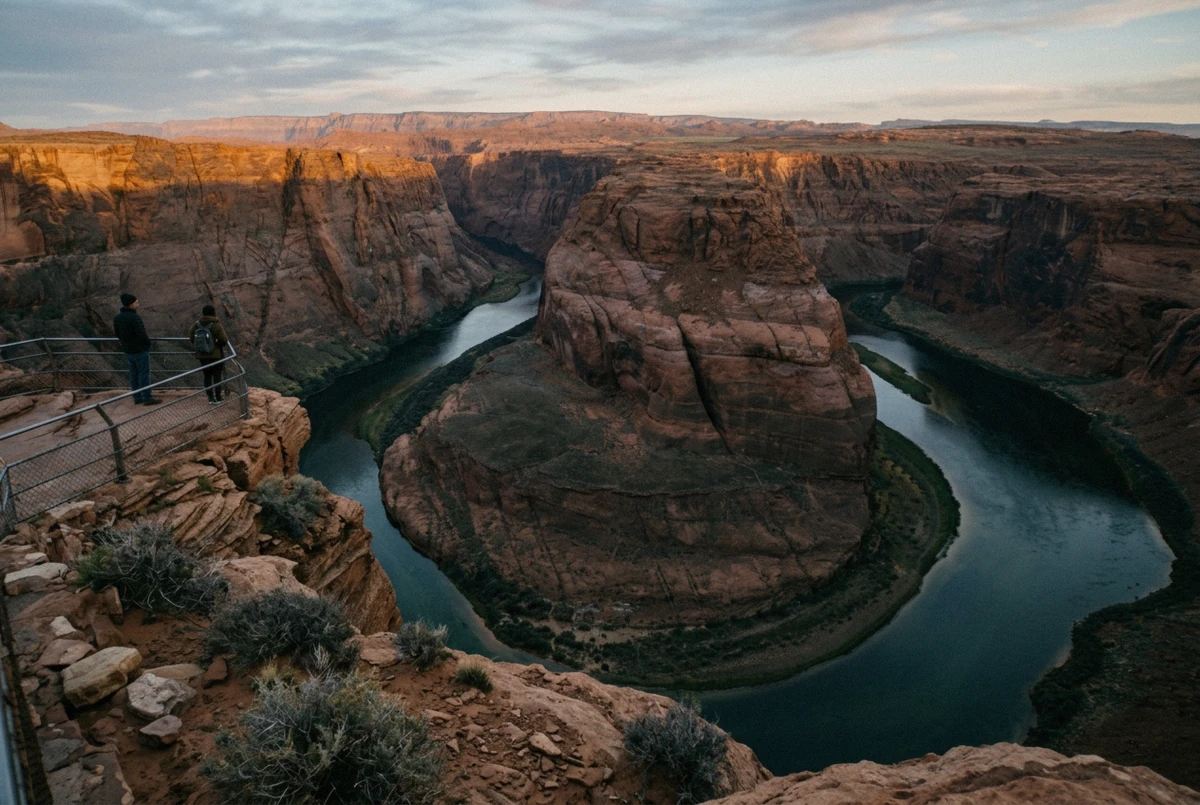
Grand Canyon South Rim: One Gate, Four Viewpoints
The South Rim's $35-per-vehicle park entrance covers every viewpoint on this list for seven days, though the fee stack changed in January 2026: non-US visitors now pay an additional $100 per person on top of the vehicle fee, a detail several older blog posts about the canyon do not mention. Mather Point, five minutes from the visitor center, is the busiest sunrise spot on the rim by a wide margin; Hopi Point a few miles west is the classic sunset promontory with the widest unobstructed view down the canyon's main axis; Grandview Point, further east, carries a fraction of the crowd at a fraction of the drama trade-off; and Desert View Watchtower closes the eastern end of the drive with a 1932 stone tower that silhouettes well at dusk.
Four photographer sessions work this rim: the Grand Canyon photoshoot, the private photography experience, the most-reviewed photographer hire, and the proposal-specialist session. None of the four locks a client into one viewpoint in advance, the meeting point is arranged by email after booking, so any of them can, in principle, meet at any of these four points, weather and crowds permitting. Photographing a proposal here carries its own timing question, worth reading in what an Arizona photoshoot costs before choosing a package, since none of the sessions include the park entrance fee.
Sedona: Red Rock on a Sunset Clock
Sedona's red rock formations photograph on their own private schedule, not the generic sunset time an app hands you. Cathedral Rock, reflected in Oak Creek at the Crescent Moon Picnic Site, is the region's single most photographed formation, and its western face loses direct sun roughly thirty minutes before the official sunset, a detail that catches first-time visitors who show up at the printed time and find the rock already in shadow. The Sedona photoshoot session works both Cathedral Rock and Bell Rock, timing morning slots for Bell Rock's rounded curves and sunset slots for Cathedral Rock's earlier light window.
Airport Mesa's hilltop lot gives the widest single-frame sunset panorama in town for a $3 parking fee, though the small lot fills in the final hour before sunset most evenings. Devil's Bridge, the largest natural arch nearby, rewards an early start: the trail itself is moderate, but the short line to stand on the arch stretches long by mid-morning on any clear day. Chapel of the Holy Cross, built directly into a red-rock spur above the highway, costs nothing beyond a donation and photographs best in late afternoon, when the concrete facade picks up warm reflected light from the rock behind it.
Phoenix: Desert Parks Inside the City
Phoenix's best frames sit inside its own park system rather than requiring a drive out of town. Papago Park's Hole-in-the-Rock, a sandstone butte with a natural window, lines up with the setting sun for several weeks each spring and fall and costs nothing to shoot beyond a ten-minute scramble up the rock. The Phoenix photoshoot session works this park as its home ground, and sometimes extends as an add-on to Lost Dutchman State Park forty minutes east, where the Superstition Mountains turn peach and pink at golden hour for a $7 vehicle fee and no permit requirement for a personal engagement shoot.
Desert Botanical Garden, inside the same Papago Park boundary, is a cultivated cactus and wildflower collection with its own photography policy attached to paid admission, best visited in the cooler morning hours. Dobbins Lookout, at the top of South Mountain Park on the valley's south edge, is free and gives the widest single view of the Phoenix skyline going dark at dusk, a frame no session in this catalog currently books but any visitor can drive to on their own. The full roster of operators this site tracks spans all three cities on this map, not just Phoenix.
Far-Flung: The Spots That Take Real Planning
Three spots on this map sit far enough from Page, Sedona and Phoenix that they need their own trip, not a detour. Monument Valley, the sandstone Mittens rising from a red desert floor, sits on Navajo Nation land rather than inside a federal park, which means America the Beautiful annual passes are not accepted at the gate; entry runs $10 per person plus $15 per vehicle for the unpaved scenic loop, and sunrise drops the Mittens' shadow across the valley floor in the frame every postcard uses. Gates Pass, west of Tucson in the Tucson Mountains, is the state's other free saguaro-silhouette sunset, quieter than anything near Phoenix and worth the detour for anyone working the southern half of the state.
The Wave, in Coyote Buttes North, is the spot that planning cannot buy: a lottery caps entry at 64 people a day against more than 200,000 applications filed each year, a $9 fee just to apply and $7 per person if drawn, followed by a shadeless six-kilometer hike with no marked trail to swirled sandstone that photographs best at midday. Havasu Falls, turquoise waterfalls deep in a Havasupai side canyon of the Grand Canyon, works on the opposite problem: the lottery ended in 2026, but a permit now costs $455 per person for a mandatory three-night stay, with no day-trip option at all, so it belongs on this list as the one destination nobody photographs on a whim.
One spot belongs in this section only as a warning: Grand Falls, the chocolate-colored waterfall northeast of Flagstaff, is closed to visitors by the Leupp Chapter of the Navajo Nation until further notice. It is not a pin on this map and should not be visited while that closure stands. Drone photography deserves its own line here too: drones are banned outright inside every unit of the National Park System, including the Grand Canyon, and require a Navajo Nation permit on tribal land at Antelope Canyon, Monument Valley and Havasu, a rule that catches more visitors by surprise than the tripod ban does.
None of these three far-flung spots carries a bookable session, so anyone drawn to this region is shooting on their own gear and their own schedule. Start at the homepage to see which regions do come with a photographer attached.
The Light Table: When Each Region Works
Arizona's regions face different directions and sit at different elevations, so the same clock hour serves different spots. This is the whole state in one table.
| Hour | Where the light lands | Shoot |
|---|---|---|
| Sunrise | East-facing rim and desert land | Mather Point, Horseshoe Bend, Monument Valley's Mittens |
| Morning | Slot canyons and shaded red rock | Lower Antelope Canyon, Bell Rock, Devil's Bridge |
| Midday | Direct overhead sun into narrow openings | Upper Antelope Canyon's beam, The Wave's sandstone swirl |
| Golden hour | West-facing red rock and desert parks | Cathedral Rock (ends early), Papago Park's window, Lost Dutchman |
| Sunset and dusk | Canyon rims and city overlooks | Hopi Point, Airport Mesa, Dobbins Lookout, Gates Pass |
Which Spot, If...
If you want one romantic golden-hour frame with no lottery involved
Cathedral Rock, and book the earlier slot: the rock's own light window ends about thirty minutes before official sunset. The Sedona photoshoot session already builds that timing in.
If you want the sunbeam photo everyone has seen
Upper Antelope Canyon at midday, late March through early October, on the Antelope Canyon photoshoot session. No beam season, no beam, so check the calendar before booking.
If you do not want to pay anything to shoot
Gates Pass, the Hole-in-the-Rock window at Papago Park, or the Chapel of the Holy Cross, all free entry with parking either free or a few dollars. None currently pairs with a bookable session; every session tracked in this comparison works a fee-based location instead.
If you want the once-in-a-lifetime shot regardless of the odds
The Wave, applied for through the lottery months ahead. Sixty-four permits a day against a six-figure applicant pool means most plans need a backup region built in, and this map's other four regions make good backups.
Best Photography Spots in Arizona: What People Ask
What is the most photographed place in Arizona?
Antelope Canyon, specifically the beam shots from Upper Antelope Canyon, is the single most reproduced Arizona photograph, followed closely by Horseshoe Bend fifteen minutes away. Cathedral Rock in Sedona is the most photographed formation outside the Page area. The map above grades all 22 spots with the hour each one works best.
Where can I take pictures in Arizona for free?
Gates Pass near Tucson, the Hole-in-the-Rock window at Papago Park in Phoenix, the Chapel of the Holy Cross in Sedona, and Dobbins Lookout on South Mountain all charge nothing to enter. Glen Canyon Dam Overlook near Page is also free, though the higher Wahweap Overlook nearby sits inside the paid recreation area.
Do you need permits to photograph in Arizona parks?
A personal camera needs no separate permit anywhere on this list, only the park's own entrance fee where one applies. A hired photographer working commercially on state or federal land is a different question, and Antelope Canyon adds its own rule on top: tripods have been banned there since 2019 regardless of who is holding the camera. The full permit and rule breakdown covers Antelope Canyon specifically; national parks and Navajo Nation land both ban drones outright without a separate permit.
Is there a map of these photography spots?
Yes, the interactive map above plots all 22 spots by region with a live filter, plus a text list underneath with each spot's access, cost and best light for anyone who wants the information without loading a map.
What are the best places for family pictures in Phoenix?
Papago Park's Hole-in-the-Rock is the easiest free option with a short, flat-enough scramble for kids, and Lost Dutchman State Park adds a mountain backdrop forty minutes east. The Phoenix photoshoot session works both locations and handles posing a group that includes small children.
Is it cheaper to shoot these spots yourself than to book a session?
Almost always, in dollars: park and parking fees run from free to about $35, while a photographer session on this list starts around $160 per person. What a session buys back is the local light knowledge, someone else holding the camera, and edited photos delivered days later instead of a memory card full of unedited files. The full cost breakdown compares both routes line by line, and every package tracked here lists its own price and photo count.